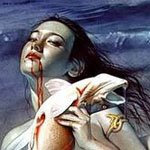
I love the x-ray photography of Judith McMillan. It has a certain ethereal quality to it.
The X-Ray Art of Judith McMillan


Last night, C and I went to an art opening for an acquaintance, Jeff Klapperich, and it was lovely.
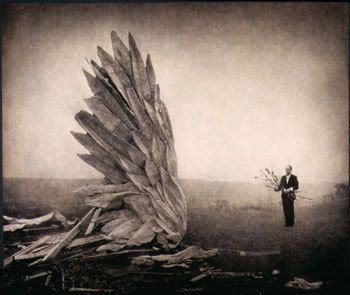
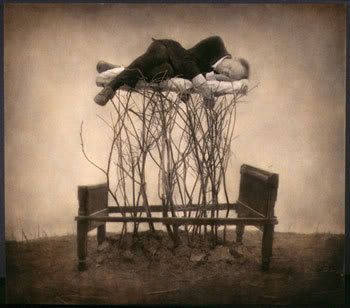
I don't know even know how to properly explain what Jeff does because his process is so detailed. Many people, at first glance, believe that his work is done digitally, but it's not. This is purely a photographic process using multiple exposures that reach into numbers that cause most professional photographers to drop their jaws a bit (or at least, the photographers that were at the opening last night). There is also no human exposure in the image. The illusion is created using a sort of layered stenciling process and a camera modification that only jeff could explain...and probably not to a photographic layman like myself. The backgrounds are pieces of art in their own right that are meticulously assembled from various objects to work with the stencils and convey the idea in the final piece.
In person, at a large scale, these pieces are just beautiful. I don't know if the full effect can be seen online in a smaller format, but I want to share them anyway. Here are a few of my personal favorites.
Sleep
The Prognosticator
The Strategist
 Absinthe Fountain
 Balances
 Spinning Wheel


I can't remember the first time that I heard the story of Orpheus and Eurydice, but it was sometime during my childhood, later to be repeated in High School Latin classes (of which I remember very little), but the first time that it really grabbed me was when I read Shade and Shadow by Sonya Taaffe, which is a modern retelling of the story and a brilliant one at that. It's available in her collection, Singing Innocence and Experience, and I can't recommend it highly enough.
I put together a slide show of imagery related to Orpheus and/or Eurydice which can be viewed here.
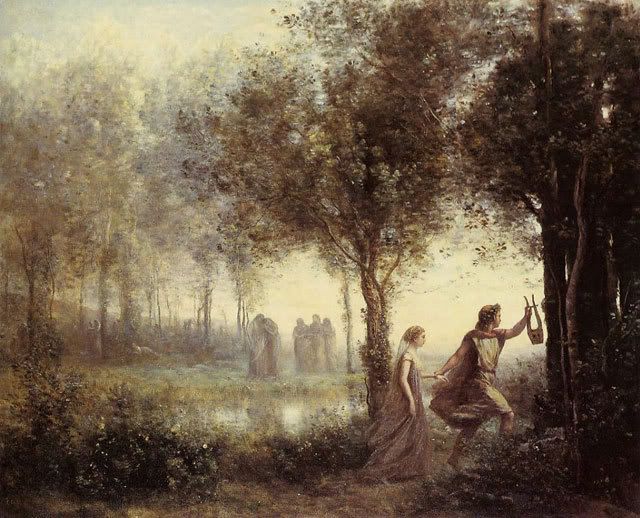
The Myth
Orpheus was the son of Calliope, muse of epic poetry. While living on Parnassus, he drew the favor of the god, Apollo, who taught him to play the Lyre while his mother taught him to write verse. With such masterful teachers, Orpheus became a great musician with the striking ability to charm animals and other objects of nature, including the trees and stones. He was also an augur, foretelling the future via the patterns of birds in flight, and a patron of both Apollo and Dionysus.
Because of his skill, his presence was necessary on the journey of the Argonauts. When they passed near the Island of Sirenum Scopuli where the sirens lured sailors to their deaths with their voices, Orpheus played and sang so beautifully that he drowned out their deadly song with his own, and the sailors passed through unscathed.
Orpheus loved Eurydice with the passion of all great lovers, but like many love stories of antiquity, their romance was doomed to an early end.
One day, Eurydice was wandering with her companions, the nymphs, and a shepherd called Aristaeus made advances towards her. She fled and ran into a nest of poisonous snakes whose bite killed her instantly and carried her to the city of ghosts. Orpheus was overtaken with grief and sang songs of such sadness that all of the nymphs and the gods were driven to tears. They urged Orpheus to travel to the Underworld to appeal to Hades, and with the power of his music, Orpheus was able to soften the heart of the god of the underworld. Hades and Persephone agreed to return Eurydice to the surface under the condition that Orpheus not look back until they reached the open air.
In his anxiety, Orpheus did look back and Eurydice vanished, leaving Orpheus alone in eternal melancholy. He forsook all gods but Apollo, shunned the love of all women, and turned to the love of young boys. This angered the Thracian Maenads of Dionysus, and one morning, while he was singing and playing his lyre in a forest clearing, they attempted to murder him by casting javelins and stones. His music was so captivating that the wood and the stones would not obey, and they fell from the air before piercing Orpheus' flesh. This sent the Maenads into a wild frenzy, and they tore him to pieces, casting the ruins of his body and his Lyre into the Hebrus river where his song continued to play until his remains reached the shore of Lesbos.
There, the inhabitants buried his head and built a shrine in his honor. The remaining pieces of his body were gathered by the muses and buried at Libethra where the nightengales sing. His lyre was placed by the gods among the stars, and he was able to spend the rest of eternity with Eurydice in the city of ghosts.
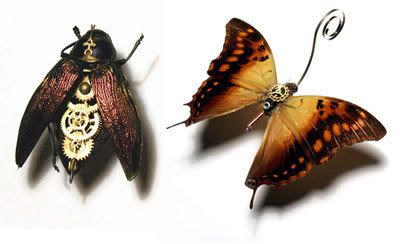
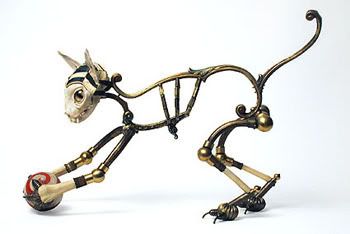
The other link is to Jessica Joslin who does amazing work with animal bones, metal sculpture, and other bits of leather, beads, glass, etc.
I'm smitten.
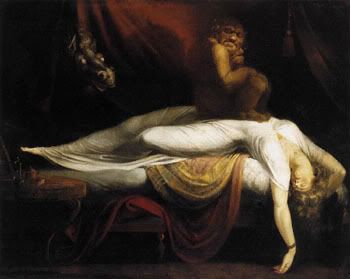
Why am I here to relate the destruction of the best hope and the purest creature on earth? She was there, lifeless and inanimate, thrown across the bed, her head hanging down and her pale and distorted features half covered by her hair. Everywhere I turn I see the same figure--her bloodless arms and relaxed form flung by the murderer on its bridal bier. Could I behold this and live? Alas! Life is obstinate and clings closest where it is most hated. For a moment only did I lose recollection; I fell senseless on the ground. - Victor Frankenstein after the murder of Elizabeth by the creature.
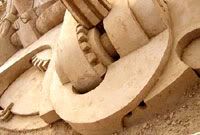 Kirk Rademaker creates brilliant machines out of sand. They have a definite steampunk aesthetic, and the attention to detail is amazing. It's somewhat sad that these pieces aren't made to last, but that's also a part of their beauty.
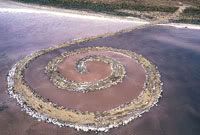 Robert Smithson was an American land artist and a pioneer of the land art movement.
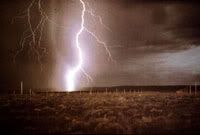 Walter De Maria, another land artist, created the Lightning Field in the high desert of New Mexico. It consists of 400 stainless steel poles spaced approximately 220 feet apart.